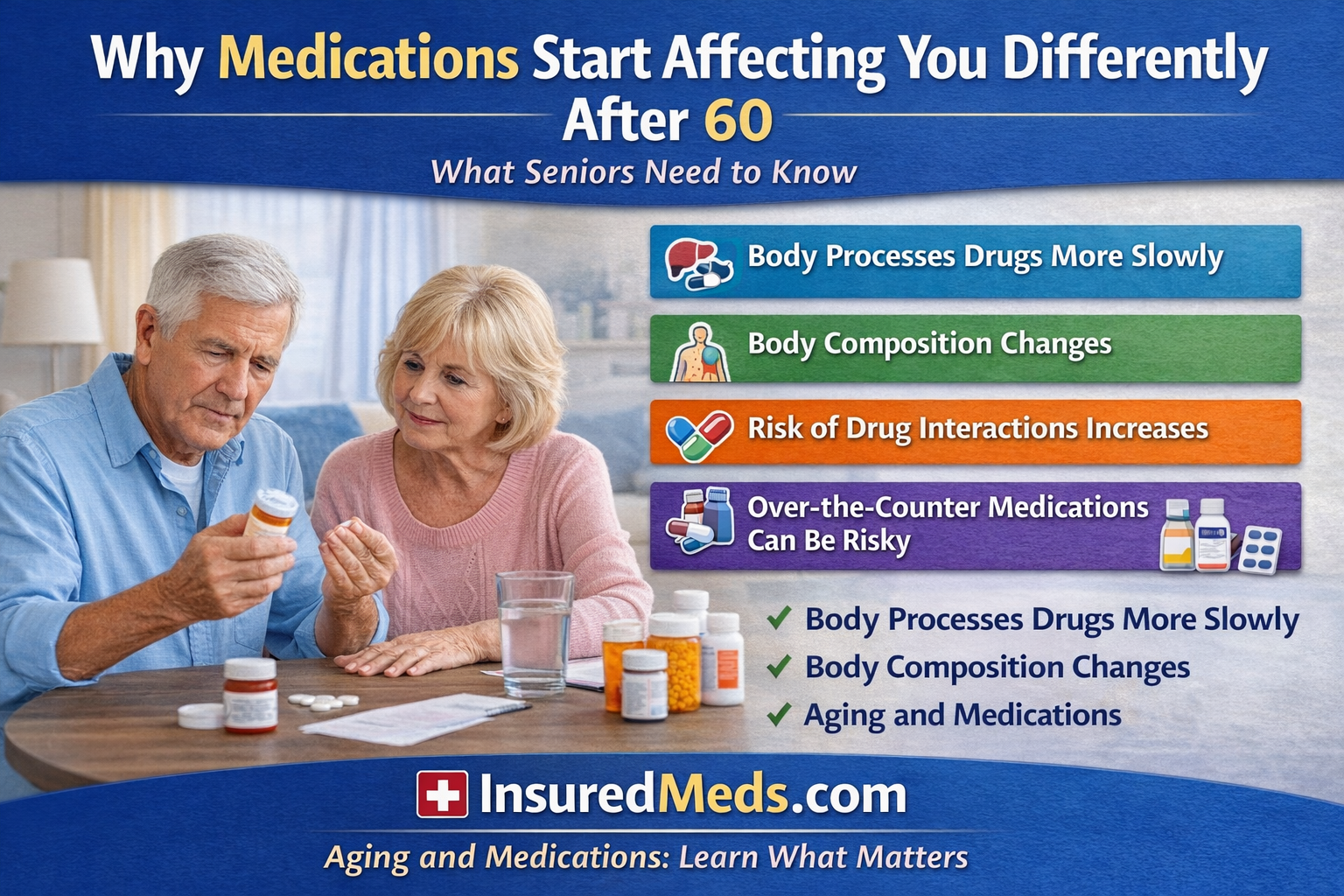
Why Medications Start Affecting You Differently After 60
Many people notice something surprising as they move into their sixties and seventies.
Medications that once seemed harmless suddenly feel stronger.
Side effects appear that never happened before.
A drug that worked fine years ago now feels completely different.
This isn’t your imagination.
As the body ages, the way medications are processed changes. Understanding why this happens can help seniors avoid unnecessary problems and make better decisions about their health.
Your Body Processes Drugs More Slowly
One of the biggest changes involves the liver and kidneys, which are responsible for breaking down and eliminating medications.
As we age:
• Liver metabolism slows
• Kidney filtration declines
• Drugs stay in the bloodstream longer
That means a dose that was normal at age 40 may linger much longer in the body at age 70.
Even common medications can accumulate over time if they are not monitored carefully.
Body Composition Changes With Age
Another reason medications affect seniors differently involves changes in body composition.
With aging:
• Muscle mass decreases
• Body fat often increases
• Total body water declines
Some medications are stored in fat tissue, which means they may remain in the body longer and release slowly.
Others distribute differently because there is less water in the body.
These shifts can change how powerful a medication feels.
The Risk of Medication Interactions Increases
Many seniors take multiple medications at the same time.
Doctors sometimes call this polypharmacy, meaning the use of several medications together.
Each additional drug increases the chance of interactions.
For example:
• Blood pressure drugs may interact with certain pain medications
• Sleep medications can amplify the effects of anxiety drugs
• Some supplements may interfere with prescriptions
This is why medication reviews become especially important later in life.
Over-the-Counter Drugs Are Not Always Harmless
Many people assume that medications sold without a prescription are automatically safe.
But some common over-the-counter medications can cause problems for older adults.
Examples include:
• Certain sleep aids
• Some cold medications
• Long-term use of NSAID pain relievers
These drugs may affect blood pressure, kidney function, or memory in sensitive individuals.
It is always wise to review these medications with a healthcare professional.
Small Adjustments Can Make a Big Difference
The goal is not to avoid medications entirely. Many medications save lives and improve quality of life.
But in Elderhood, dose, timing, and combinations matter more than ever.
Simple adjustments can reduce risk:
• Reviewing medications once a year
• Asking whether lower doses are possible
• Checking for interactions between prescriptions and supplements
• Monitoring kidney and liver function through routine tests
These small steps help ensure medications remain helpful rather than harmful.
A New Awareness About Aging and Medication
Modern research is helping doctors better understand how aging changes the body.
The goal is not just longer life, but healthier years with fewer complications.
Understanding how medications behave in the aging body is part of that progress.
And for seniors who stay informed, those years can be lived with greater confidence and better health.

